ABOUT
subsidiary & distributed labels

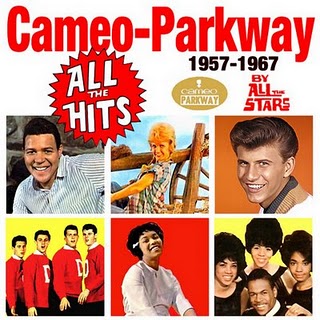
About Cameo/Parkway
History of the Label

Co-owner Bernie Lowe
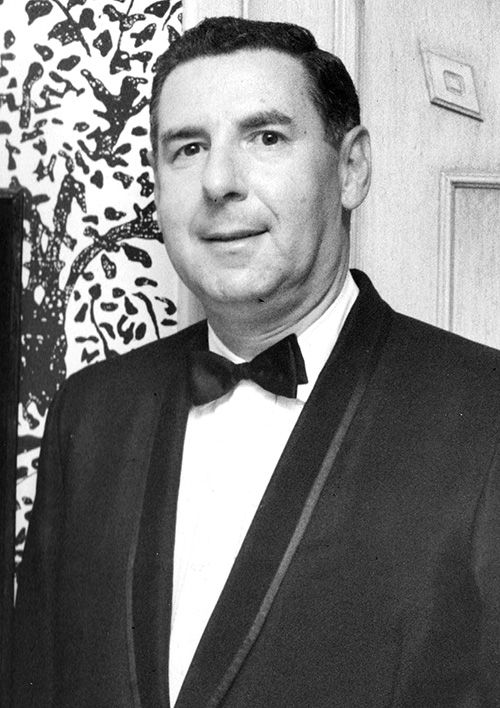
Co-owner Kal Mann
photo courtesy of Jon Cohen

Lowe & Mann


Kal
Mann
Bernie Lowe
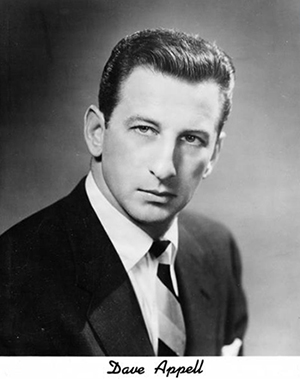
Dave Appell
Founded in Philadelphia, Pennsylvania, USA, in late 1956 by songwriter Bernie Lowe, Cameo Records and its Parkway subsidiary were the home of most of the major hits by such artists as Bobby Rydell, Chubby Checker, the Dovells, Dee Dee Sharp, the Orlons, and the Tymes. Located at 1405 Locust Street and later on at 309 S. Broad Street, Cameo grew to become the biggest independent record company of the day.
Bernie Lowe was soon joined by friend and fellow songwriter Kal Mann and a short time later, Dave Appell. Their first # 1 pop hit happened in early 1957 with Charlie Gracie’s "Butterfly," a number One single in 1957. The Rays' doo-wop classic "Silhouettes" was next, also in 1957. The label's headliner, a pompadoured and personable teen idol named Bobby Rydell gave the label a steady string of pop hits beginning in 1959, including "We Got Love," "Wild One" and "Swingin' School." Rydell still holds a special place in the hearts and minds of many Philadelphians.
Parkway was launched in 1958 – first singles were by Jerry Field and the Temptations – and from the next year on they went on to have both national, and local dance hits but had no real success until 1959, when Ernest Evans' name was changed to Chubby Checker and scored a major dance sensation with "The Twist." Checker continued to have hits throughout the early 60s. Other Cameo-Parkway hits included Sharp's "Mashed Potato Time," the Orlons' "South Street" and "Don't Hang Up," the Dovells' "Bristol Stomp" and "You Can't Sit Down" and the Tymes' "So Much In Love."
In the years of 1961 through 1963, Cameo Parkway was one of the biggest independent record labels in the country. They had distribution rights and publishing, printing plants and business associates in many facets of the recording industry. And all this with a three track tape machine. In time, they got bigger and better equipment, but still kept a dedicated staff of session players and business staff to keep this well oiled machine going.
In early 1964, three events sent Cameo-Parkway into a sharp decline from which it would never fully recover. The first was the move of American Bandstand from Philly to LA in February; suddenly, Cameo-Parkway's primary source of national exposure and promotion was gone. Just as devastating (as it was to many other American labels) was the second event: the onslaught of the British Invasion in 64/65, which dramatically changed the tastes of the American record buying public. Cameo tried to keep pace by licensing a handful of early British beat group singles, notably the first two flop singles by the Kinks, but none made the US charts. The third and final event was that Bernie Lowe had become increasingly disenchanted with the business side of record making, and suffering from nervous exhaustion and bouts of depression, he sold his stake in the company in 1964 to Al Rosenthal, a Texas business man. Mann and Appell soon followed, and by mid-1965 none of Cameo-Parkway's founding trio were associated with the label, and their biggest stars (Bobby Rydell and Chubby Checker) had also left. Cameo's new management was unable to duplicate their success with artists like JoAnn Campbell, Maynard Ferguson, Clark Terry, the instrumental group LeRoy & his Rockin' Fellers and TV-stars-turned-singers like Clint Eastwood and Merv Griffin.
In mid-1966, 23-year-old Neil Bogart was made the label's new head of A&R. Turning to mid-western garage bands and orchestrated soul productions (including the distribution of Curtis Mayfield's "Windy C" label), Bogart managed to shepherd in a brief Cameo-Parkway renaissance. The last major hits for the label were "96 Tears" by Question Mark & the Mysterian which went to #1 in the fall of 1966 and "Beg, Borrow and Steal" by the Ohio Express (1967). Bogart also signed Bob Seger to his first recording contract, and Cameo-Parkway issued his first five singles, which were all huge regional hits in Michigan but failed to catch fire nationally.
Actually Bunny Sigler was the last artist to have a record out on their label, "Follow Your Heart." In 1967 the Cameo-Parkway catalogue was sold to entrepreneur Allen Klein, and in February 1969 the name was changed to ABKCO Records who continues to own it today.
After fans having waited 20 years for a remastered CD, the Cameo/Parkway collection and individual artist CDs have been released by Abkco. With over 650 singles and over 160 albums released, there's a wide variety of styles and genres, ranging from dance tunes, country, soul, doo wop, pop instrumentals, to name a few still waiting to be released.
≈
There's a great book released a few years ago, called "The Twist - The Story of the Song and Dance That Changed the World" by Jim Dawson. Besides the intricacies of the dance craze, Dawson goes into the inner workings of Cameo Parkway, it's owners, arrangers, and business dealings. Highly recommended.
Another outstanding book, is famed disc jockey and TV star Jerry Blavat's "You Only Rock Once - My Life in Music". Jerry tells us, in his own words, the scoop on the Philadelphia music scene of the 50s and 60s. And with that, his dealings with the Cameo Parkway label. A real good read.
A very informative book on "American Bandstand - Dick Clark & the Making of a Rock 'n' Roll Empire" by John A. Jackson gets into the Philadelphia music scene. You'll read of the wheeling & dealing of payola, favors, and inappropriate moves.
Cameo artist Charlie Gracie's great autobiography, "Rock 'n' Roll's Hidden Giant - Story of Rock Pioneer". A wonderful book on Charlie's early days, the Cameo years, and current days. Early influence to many rock stars.
Cameo Superstar Bobby Rydell's new autobiography, "Teen Idol on the Rocks" is available now. Bobby tells it all, from child star to current times. A lifetime of fans have been asking for it.

Dick Clark and Bobby Rydell

Jerry Blavat, Charlie Gracie, and Chubby Checker
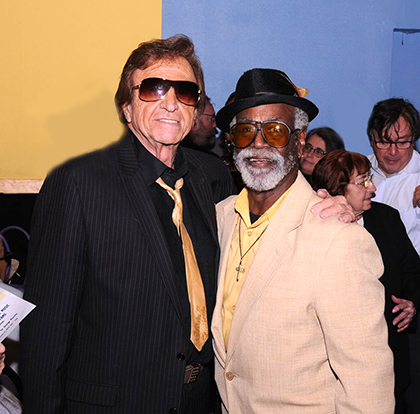
Philly DJ Giant Gene Arnold and Orlon Steve Caldwell
Artists
The Orlons

L-R: Audrey Brickley, Rosetta Hightower, Shirley Brickley
Thanks to John Clemente for
the image of The Orlons!
Fun filled dances tunes were the Orlons specialty, making them one of the most popular groups to ever come out of Philadelphia. Originally called Audrey and the Teenettes, the group was formed at a Philadelphia junior high school in the early Fifties and consisted of Audrey, Jean, and Shirley Brickley, Rosetta Hightower, and Marlena Davis. When Mrs. Brickley refused to let Audrey, who was thirteen, sing with the others in one of Philadelphia's small teen clubs she and sister Jean quit the group.
Shirley, Rosetta, and Marlena continued to singing at Overland High School where they were heard by fellow student Stephan Caldwell, who sang with a local group called the Romeos. Caldwell brought his baritone lead to the girls attention and joined the group. The group was influenced by acts like The Chantels, Ray Charles, and The Moonglows.
Len Barry, lead singer for the Dovells and a friend from Overbrook High School, where the Orlons were students suggested they audution for Cameo-Parkway Records. So in the fall of 1961 the Orlons auditioned for Kal Mann. They did just that, but failed to stand out from the many that auditioned daily. Perservering the group came back for two more auduitions and were signed to record for Cameo Records. A&R director Dave Appell started writing songs for the group and decided to feature Rosetta on lead.
The Orlons' first single "I'll Be True" elicited little interest as did their early 1962 follow-up "Happy Birthday 21." In early 1962 The Orlons provided back-up vocals on Dee Dee Sharp's Mashed Potato Time" (#2 Pop, #1 R&B). That spring they recorded "The Wah Watusi" which in July made it nationally to the #2 spot. At the same time they again provided back-up vocals on Dee Dee Sharp's second hit "Gravy (For My Mashed Potatoes)" which went to #9. The follow-up to "The Wah Watusi" "Don't Hang Up" reached #4 Pop and #3 R&B in the fall and winter of 1962. In 1963 they had hits with "South Street" (#3 Pop, #4 R&B) and "Crossfire" (#19 Pop, #25 R&B).
The Orlons' first major performance was at New York's Apollo Theatre with The Crystals, Bob B. Soxx and the Blue Jeans, Chuck Jackson, Tommy Hunt, and Gene Chandler. The Orlons also became mainstays of Dick Clark's Caravan of Stars.
In 1964 with the start of the British Invasion the best three of the four singles could do was make it into the 60s on the charts ("Shimmy Shimmy" #66, "Rules of Love" #66, and "Knock Knock" #64). These were the last of the Orlons' chart hits.
Marlena was the first to leave in October, 1963 to be replaced by Sandy Person, the wife of a member of the backup band. By this time Bernie Lowe had sold Cameo/Parkway to record distributor Alfred Rosenthal with little insight into the recording processs. Rosenthal hired Neil Scott, a talented producer, but it was already too late to fight the British Invasion. Steve left the group in late 1964, and was not replaced, followed by Sandy replaced by Yvonne Young, who was soon replaced by original member Audrey Brickley.
The Dovells

The Dovells originally formed in 1957 as the Brooktones, taking their name from Overbrook High School in Philadelphia, where each of the original members -- Jerry Gross (aka Jerry Summers), lead and first tenor, Len Borisoff (aka Len Barry), lead and tenor, Mike Freda (aka Mike Dennis), second tenor, Arnie Silver (aka Arnie Satin), baritone, Jim Mealey, bass, and part-timer Mark Gordesky (aka Mark Stevens), tenor -- attended classes. They began singing at local school functions and occasionally at John Madara's record store, located at 60th and Market Streets in Philly. (Madara had co-written "At the Hop" for Danny & the Juniors, in addition to other classics). Inspired by Frankie Lymon and the Teenagers -- they would even record "Why Do Fools Fall in Love" and "I Want You to Be My Girl."
The Brooktones performed for the next few years and even though their "No, No, No" gained some recognition in Philadelphia, the group had little success outside the immediate area and disbanded. Summers and Dennis left to form a new group called the Gems with Mark Stevens and Alan Horowitz in the summer of 1960. In the meantime, Barry and the other Brooktones were negotiating to sign with Bob Marcucci's Chancellor Records (home to teen idols Fabian and Frankie Avalon), adding William Shunkwiler and Jerry Sirlin. In December of 1960, after a live audition was arranged for the quintet with Cameo/Parkway, they were quickly signed to the label. Barry later asked Summers to come back and help out on the harmonies and at Summer's suggestion, Mike Dennis also joined the group as well. They were now back to the core group. Cameo exec Bernie Lowe suggested the Brooktones change their name to the Deauvilles (after the Deuville Hotel in Miami Beach), but the group thought it was too hard to spell and changed it instead to the Dovells.
The Dovells' first single, released in March 1961, was a re-recorded version of "No, No, No" which fared little better the second time it was released. In May, the Dovells recorded "Out in the Cold Again" (a remake of the Teenagers' ballad) and a new song based on a dance that Parkway promotion man Billy Harper had witnessed kids doing at the Goodwin Fire Hall in Bristol, PA, just outside Philadelphia. It was called "The Stomp," so the Dovells' decided to give it a more formal name on their recording: "The Bristol Stomp". The song didn't chart during the summer of 1961, but in September, just as school was once again in session, the song broke out of the Midwest and began to get airplay, gaining enough momentum to go national by September 11.
By mid-October, it was climbing the charts, making it all the way to number two. Parkway followed up with the Dovells' "Bristol Twistin' Annie" and several dance-related Top 40 tunes. In mid 1961, they had a hit called "Hully Gully Baby". During 1962, the Dovells were immortalizing every dance Dave Appell and Kal Mann (who wrote many of the Dovells' songs) could think of, but didn't have another hit until "You Can't Sit Down," their version of Phil Upchurch's "break" song. In 1964, the Dovells recorded one of the first covers of "She Loves You" by a new English group called the Beatles, but Parkway delayed its release, and when the original shot to number one, it seemed like a bad idea to release the Dovells version (which continues to sit in a vault somewhere). The Dovells backed up Fabian, Chubby Checker, and Jackie Wilson at the Brooklyn Fox and often recorded as an uncredited vocal group behind Checker (that's them on the hit "Let's Twist Again"). They toured continuously too, until the inevitable tensions arose and ultimately exploded at a Christmas show performance in Miami Beach in December 1963.
Len Barry
quit the group. (He later signed with Decca as a solo act and is today
remembered best for his hit single "One,
Two, Three," which charted at number two on the pop charts in November
1965.) Now down to a trio, the remaining Dovells recorded three Parkway singles
in 1964 and toward the end of 1965. In 1962, they appeared in the film 'Don't
Knock the Twist', appearing alongside Chubby Checker, Gene Chandler,
and Vic Dana.
Bobby Rydell

Robert Louis Ridarelli was born April 26, 1942 and grew up in the same Italian neighborhood of South Philadelphia as Frankie Avalon and Fabian. In his early years, Bobby would sit in front of the TV set trying to impersonate performers like Louis Prima, Milton Berle, and Johnny Ray. His father recognized Bobby's talent and encouraged him to pursue a show business career. While other children were listening to the latest hits, Rydell's father was taking him to listen to the last of the big bands working the various Philly clubs.
At age five, Bobby began taking drum lessons because he admired Gene Krupa, and by age seven, he had begun to work night clubs in Philadelphia. At nine, he was a regular on Paul Whiteman's television show that was broadcast from Philadelphia and performed on it for three years. It was during this time that Whiteman changed Bobby's last name to Rydell, because he had trouble pronouncing Ridarelli.
By the time he was a teenager, Bobby was playing drums in a dance band called "Rocco and the Saints," that featured Frankie Avalon on the trumpet. The band played summer bookings in the seaside resorts around Atlantic City. Rydell also played the guitar and bass and was a natural comedian.
Frankie Day, who managed Rocco and the Saints, became interested in Rydell as a solo act. With Bobby's father's approval, Day began taking Rydell to different record companies. Day was unsuccessful for several years, though Rocco and the Saints had backed Frankie Avalon's first sessions on Chancellor Records.
In late 1958, Bobby recorded a song called "Fatty Fatty" for Veko Records in Baltimore. The release went nowhere, the promoters disappeared with the masters and Rydell's father was left with the bill for the sessions. Finally, Frankie Day approached Bernie Lowe, the owner of Philadelphia's Cameo Records, who had been Rydell's vocal coach when he was ten. In January 1959, Rydell signed a contract with Cameo and his first single "Please Don't Be Mad" was released in February, 1959. "Please Don't Be Mad" did no better than "Fatty Fatty." Lowe then got him a guest spot on "American Bandstand." He was only interviewed and didn't sing, but he did manage to plug "Please Don't Be Mad."
In 1959, Cameo released his second single "All I Want Is You" but again the record saw little action. Rydell became discouraged as his old friend Frankie Avalon had been making hit records for over a year. "Venus" was one of the biggest hits of 1959 and even Fabian, who couldn't sing a note, had been having hits since the first of the year.
Rydell had almost resigned himself as being a drummer in a second rate combo, when Bernie Lowe came up with a song called "Kissin' Time." Released in mid-June, the record caught on in Philadelphia, followed by Detroit and Boston. Dick Clark began playing it on American Bandstand and within three weeks after its release, it was a national hit. Bobby Rydell was just seventeen.
In August, Rydell appeared on Dick Clark's American Bandstand where he lip-synched "Kissin'' Time" and "We Got Love," which was a solid follow up.
Rydell appeared at the Michigan State Fair in September, 1959 with a Dick Clark show. This led to him touring with Dick Clark's first rock and roll caravan that began on September 18 and was booked for forty-four shows through the end of October. By then, "We Got Love" had gone gold and become Bobby's first Top Ten hit.
Rydell's biggest selling single, the million selling "Wild One" was released in early in 1960. "Swingin' School" was a springtime hit and third million seller. That summer, Bobby showed his amazing voice on an song called "Volare." The song had been pulled from a previou session of songs that were recorded in a big band style, meant to introduce Rydell to an older audience.
Over the next three years, Rydell had a string of hits that sold more than a half million copies each. Several, including "Good Time Baby", "I've Got Bonnie", "I'll Never Dance Again", "The Cha-Cha", and "Wildwood Days" made the Top Twenty. 1963's "Forget Him" almost made #1 and sold over a million copies.
Rydell appeared in the 1963 movie version of the Broadway hit musical "Bye, Bye, Birdie". Though the story dealt with a rock and roll singer, Rydell was cast with Ann-Margaret as a pair of high school sweethearts.
In 1964, the British Invasion began and Rydell, like many
American acts, was shut out from the hit making machinery of the record
business, but that hasn't slowed Bobby down on bit. He's still on tour and
wows every audience.
Chubby Checker
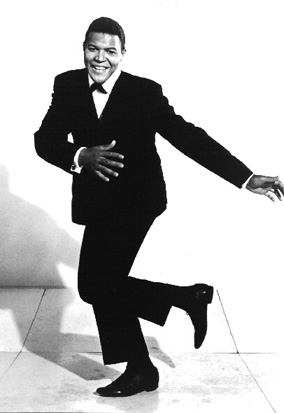
Ernest Evans was born on October 3, 1941 in South Carolina, but grew up in Philadelphia, where he lived with his parents and two brothers. When he was a small boy, his mother took him to see Sugar Charles Robinson, a child piano prodigy. Ernest was so impressed, that he vowed to someday enter show business and took his first step toward that goal by forming a street corner harmony group when he was only eight years old.
By the time he entered high school, Ernest had learned to play the drums, piano and could do a number of vocal impressions. He also made up little dances and along with his friend, Fabian Forte, who would have show business success of his own, entertained classmates whenever he could. He also sang and cracked jokes at his after school job at a Ninth Street meat market.
The store owner, Henry Colt, was so impressed, he began showing off his employee to anyone who would listen. Eventually, he arranged for young Ernest to sing on a private recording for Dick Clark. The result was a Yuletide novelty tune called, "The Class" on Parkway Records, on which Ernest did several impressions of top recording stars. Dick Clark sent it out as a Christmas greeting in 1958, and it got such good response that Cameo-Parkway released it commercially and signed Ernest in early 1959.
During the recording session, Clark's wife asked Ernest what his name was. "Well," he replied, "my friends call me 'Chubby'." As he had just completed a Fats Domino impression, she smiled and said, "As in Checker?" That little play on words got an instant laugh and stuck, and from then on, Ernest Evans would use the name "Chubby Checker."
While all this was going on, a band called Hank Ballard and the Midnighters were playing at an Atlanta roadhouse called the Peacock Club. To liven up their show, they had worked up a little dance routine. Hank wrote a tune to go with it, and three weeks later, on November 11, 1958, the band recorded the original version of "The Twist."
King Records put the song on the "B" side of "Teardrops On Your Letter," which made the R&B top ten in the spring of 1959. In those days, flipping a record over to hear the other side, was a common practice of DJs and "The Twist" started to get some air play. Teenagers loved the song and Dick Clark was quick to notice. He booked Hank Ballard and the Midnighters on his show, but the band made what must have been the greatest mistake of their career...they failed to show up. Dick then suggested that someone else record the song and recommended it to Danny and the Juniors, of "At The Hop" fame. When the recording session failed to produce any positive results, Henry Colt stepped in, and asked that his protégé be given a chance at it. Chubby sang his vocal over a pre-recorded instrumental track.
Bernie Lowe, president of Cameo-Parkway Records, was not impressed with Chubby's recording and felt that it might be suitable for a "B" side at best. For that reason, it took nearly fourteen months, from June 1959, to August 1960, for the Checker version of "The Twist" to catch on. Chubby worked hard at promoting the record, undertaking a non-stop round of interviews, TV dates and live performances. After three weeks of demonstrating the Twist, he had lost nearly thirty pounds.
"The Twist" became a dance sensation and scores of twist tunes followed, like "The Peppermint Twist," "The Oliver Twist" and dozens of variations. This opened up a floodgate of new dances. The Fly, The Hully Gully, The Popeye, The Jerk, The Boogaloo, The Philly, The Locomotion, The Swim, The Hucklebuck and The Funky Broadway were just a few. Many of these were first introduced by Chubby Checker, who also kicked off the next really big dance craze, "The Pony."
A song called "Pony Time" was written in 1960 by Don Covay and John Berry and was released on the tiny Arnold label by a group called "The Goodtimers." When the song began to take off locally, it was brought to Chubby Checker's attention, and he covered it right away. Chubby's version went all the way to number one and stayed on the charts for sixteen weeks in 1961.
In the fall of 1961, record industry history was made, when Checker's original hit record, "The Twist," re-entered the charts and by January of 1962, it was back in the number one position. No other record before or since has accomplished that feat. Combining it's 1960 run with it's 1961/62 return, "The Twist" spent an amazing nine month total on the U.S. best seller charts.
Chubby Checker merchandise was everywhere, and included, T-shirts, shoes, ties, dolls, rain coats, and chewing gum. His success continued for years with the release of one dance record after another, with, "The Fly" and "Let's Twist Again," for which he won a Grammy for the "Best Rock Performance." More hit records followed. "Slow Twistin'," "Dancin' Party," "Popeye the Hitchhiker," and "The Limbo Rock" all came along in 1962.
1963 saw Checker return to the hit parade with, "Birdland"
and "Twist It Up," after which he followed with "Loddy
Lo" and a series of other novelty type tunes through 1965.
Dee Dee Sharp
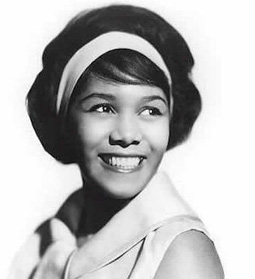
Born Dione LaRue, and best known for the dance hits she made famous in the 1960's on Cameo Records, Sharp is also known for her interpretation of ballads and show tunes. She became the first rock and roller to perform in major supper clubs and show rooms working with such legendary performers as Gizelle McKenzie, Frank Fontaine, Don Rickles, Donald O'Connor, Tom Jones and Lou Rawls. Her many television appearances have included "Ed Sullivan," "Tonight Show," "Mike Douglas," "American Bandstand," and "Entertainment Tonight." Her music has been featured in such films as "Sister Act," "Hairspray," "Desperately Seeking Susan" and "Troop Beverly Hills."
Born and raised in the City of Brotherly Love, this Philadelphia native began singing as a child at her grandfather's church. Answering a newspaper ad at age 13 for a girl who could read music, play piano and sing, she was soon singing background vocals on records by Frankie Avalon, Freddie Cannon and Chubby Checker. In 1962 she took center stage at Cameo-Parkway Records when she was asked to record her first solo record, "Mashed Potato Time." The record soared up the pop and R&B charts and was followed by a string of hits: "Gravy (For My Mashed Potatoes)," "Ride" , "Do The Bird," and "I Really Love You" among them. Only in her teens, Dee Dee Sharp became an international star. She toured the U.S. and Europe quite often as part of Dick Clark's "Caravan of Stars," working with just about every major act in the golden age of rock and roll.
Question Mark and the
Mysterians

In Saginaw, Michigan, 1962, an out-of-work bass player, Larry Borjas was watching a sci-fi movie called 'The Mysterians' and thought it was a great name for a group. He contacted a cousin, guitarist Bobby Balderrama, and a drummer, Robert Marinez. Together they started playing at teen clubs around central Michigan. Eventually, they added a fourth member, organist Franklin Rodriguez.
One night, while appearing at the Mount Holly Ski Lodge, the band was approached by a stranger who said he wanted to become their manager. They agreed and later found out that he could sing so well that they made him their lead vocalist. It was said that not even the members of the band new his real name or anything about his past. He never removed his sun-glasses and was known only by the pseudonym, "?" (Question Mark). He even tried to give the other members a secret initial such as Y, X and other letters. The boys were grateful, but decided to keep their own names.
When the Vietnam war escalated, bassist Larry Borjas was drafted and drummer Robert Marinez enlisted. They were replaced by Frank Lugo and Eddie Serrato. Soon after, Question Mark revealed that he had written a poem, entitled "Too Many Teardrops." He invited the group to set his words to music and they did so. Eddie, however wasn't happy with the title and suggested they call it "69 Tears." "We can't use that" said another band member. "If we call it that, it will never get played on the radio." Another suggested that they turn the numbers around and call it "96 Tears." All the Mysterians thought that was a good idea. "96 Tears" became a great crowd pleaser at the Mount Holly dance hall and before long word had reached Lilly Gonzlaez, the owner of Pa-Go-Go Records. She agreed to financially back the group in recording the song. The session took place in a makeshift two-track "studio" in Lilly's living room. Afterward, there was a disagreement as to which side of the record to promote. Some Mysterians opted for the flip side, "Midnight Hour," because it was "more funky."
Question Mark though, pushed "96 Tears," and when the tune began to do well locally, he took copies to Bob Dell, the program director of radio station WTAC in Flint Michigan. Dell helped the group get better bookings and before long "96 Tears" was the number one request item at the station. Air play spread to Detroit, and when radio giant CKLW across the border in Windsor added the record to its play list, Cameo Records stepped in and bought the master tape. "96 Tears" broke coast-to-coast in early September 1966, and by October, it was the top-selling record in America. In November, twelve weeks after Cameo picked it up, Question Mark and the Mysterians were presented with a gold record, signifying over a million dollars in sales. In all, their tune spent nearly four months on the US hit parade.
The band made several TV appearances on shows like Where
the Action Is, and American Bandstand. They also managed a follow up
hit called "I Need Somebody,"
which made it to #22 on the Billboard Pop chart. After that, Cameo Records was
spiraling down, taking most of their roster with them. Subsequent 45 releases and an album, "Action," did not have
strong sales. The singles "Can't Get Enough Of You Baby," "Girl,
You Captivate Me" and "Do
Something To Me" all, while great songs, failed to match the group's earlier
success.
The Tymes
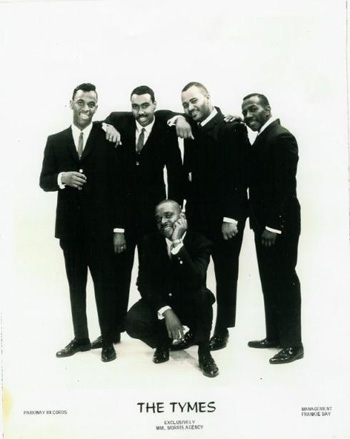
The Tymes started out in 1959 with the line-up of Al Berry, Norman Burnett, George Hilliard and Donald Banks, calling themselves the Latineers. They tried to pattern themselves like the Flamingos, being a big influence on them. The Latineers didn’t have an official record released those days. They did cut a demo at a record shop at 13th Street and Market in Philadelphia. The next year they recruited George Williams Jr. to become their lead singer. He was greatly influenced by Johnny Mathis. Still in the early 60s singing was more or less a hobby for the boys. There was a talent contest in 1963, called the Tip-Top Talent Hunt, and WDAS radio station sponsored it. Leroy Lovett was one of the judges that heard them, who in turn contacted Billy Jackson. He was the head of the A&R department at Cameo-Parkway. Leroy was known as an ace arranger in Philadelphia, and Billy Jackson had been a member of the Revels ever since the group started recording in the mid-50s. They had big records like "Cha Cha Toni" (Sound 135 in ’56) and "Dead Man’s Stroll" (Norgolde 103 in ’59).
After the group broke up, Billy took the job at Cameo-Parkway. They had a big stable of stars, but were always recruiting new talent. After Len Barry left the Dovells, he went went Decca Records, and the Tymes backed him up on 1-2-3. They also backed up Johnny Maestro. He did a song called "I’ll Be True" (Cameo 256; ’63). And they backed Chubby Checker on a few things. Lead singer George Williams came in with a song, and, at first calling it 'As We Stroll Along'. He had written it they all had a hand in writing it. Credited to Jackson-Straigis-Williams, "So Much In Love" entered the Billboard pop charts the first of June in 1963, went to # 1-pop (for one week) and # 4-r&b, and had a pop chart run of 15 weeks (r&b – 10 weeks). In Britain it hit # 21-pop. The song was done a cappella. This catchy finger-snapper is a pure and melodically simple ballad, and quite doowopish.
Actually it’s a clean-cut pop song with a beautiful tune. It is one of the most covered songs in music history: All-4-One, Joel Katz, Art Garfunkel, Jay & the Americans, Timothy B. Schmit, the Shagri-Las, Percy Sledge, the Chiffons, and many, many more. (On the very first single pressings by the Tymes it read 'So In Love'. Roy Straigis was the musical arranger for "So Much In Love." They did it with a jazz beat, then a full orchestra, a calypso beat and lastly an uptempo beat. Finally Bernie Lowe came along and said to try something new. The high female voice belongs to Marlena Davis of the Orlons. On the b-side they released a song titled "Roscoe James McClain," a Coasters type novelty song and unlike any other Parkway record the Tymes released.
The Tymes released an album by the same name with a mixture of
a few new melodies but for the main part standards. The album, which first was
issued with two different sleeves, could be considered as one of the first
concept albums with monologues between the tracks gluing the plot together –
first Alone, then falling in love and finally Autumn Leaves. Arranged by Roy
Straigis and Billy Jackson, the album entered the charts on August 3 in 1963,
went up to # 15-pop and stayed on the charts for twenty weeks. The opening track
was the standard called "Alone." Other standards included "That Old Black
Magic," "Goodnight My Love," "The Twelth Of Never," "Summer Day" and "Autumn
Leaves." "My Summer Love" was a smooth ballad cut a few months earlier by
Ruby & the Romantics on Kapp. "Let’s Make Love Tonight" differs from the rest of
the repertoire, as it is a Drifters kind of a ditty, where each member of the
group shares lead. Bobby Rydell did it originally on Cameo. It was part of
Cameo-Parkway’s catalog, as many of their songs were. "You Asked Me To Be Yours"
and "Way Beyond Today" are two soft and melodic ballads from the pens of
Straigis-Jackson-Williams, but "Summer Day" is the other song (besides "Let’s
Make Love Tonight") that pops out as a different interpretation, not MOR and
easy listening music, but almost like "Telstar" by the Tornadoes with some
Spanish elements in the arrangement. They tried a variety of things then. Billy
Jackson thought it was a good idea, so they just went ahead and put it on tape.
In arrangements they relied on George Williams Jr., “the black Bing Crosby,"
lead voice and the skillful harmonizing by the rest of the group, so the
orchestral backing was rather scarce on many of their Parkway recordings.
Charlie Gracie

Charlie Gracie, who grew up around South Eighth Street and attended Southwark elementary school and Southern High. When he recorded "Butterfly" in December 1956, Gracie was already a young artist on the rise, a visible part of the Paul Whiteman revue who'd won the family its first refrigerator in a talent contest, and was developing a reputation via rockabilly-tinged singles recorded for Cadillac.
At that time, Cameo was one of a bunch of fledgling independent labels trying to break into rock-and-roll; it hadn't had a hit of any consequence yet. "We opened the door," Gracie says flatly. "If we don't have that hit, none of the other things that came along at Cameo-Parkway would have happened." Including, later stars such as Chubby Checker. "Butterfly" rocketed up the charts. By March 1957, it had displaced "All Shook Up" at No. 1, and inspired a copycat version from pre-rock star Andy Williams (whose recording also went to No. 1). Gracie followed that with the B-side, "99 Ways," and then other singles, including "Fabulous" and "Cool Baby". Pretty soon, Gracie was making money: He bought a Cadillac with his first royalty check, and moved his parents to a house in Havertown. The whirlwind landed Gracie on Alan Freed's rock-and-roll revues, American Bandstand, and The Ed Sullivan Show, where he performed several times. Then, it took him to England and Europe, where Gracie made his most lasting impression.
Rock-and-roll was just beginning to spread, and when an American rocker visited venues such as London's Hippodrome, it was an event. Gracie recalls being swarmed by fans as soon as he arrived. In Gracie's audiences that year were some youngsters who would change rock-and-roll: Paul McCartney, Van Morrison, George Harrison and Graham Nash. Years later, Nash surprised Gracie by producing a Camel cigarette butt from his wallet that he said Gracie, who still smokes, had flicked outside a club in Manchester when he performed there in 1957. What happened next was all too predictable. Gracie discovered he wasn't getting the royalties he felt were due him from his singles. Cameo disputed this. There was a long legal battle, and eventually Gracie settled out of court for $50,000.
Timmie Rogers
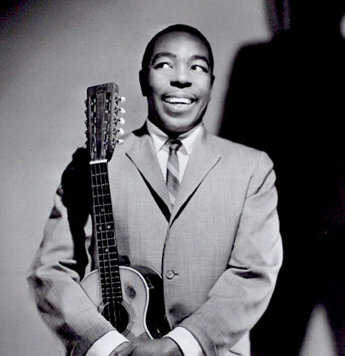
Timmie Rogers was born in Detroit on July 4, 1915. Rogers was earning nickels and dimes dancing on the street by the time he was 8. His father, the son of a slave, taught himself to read and he ran away from home at age 12. He took a job as a dishwasher on a boat, where he learned the languages of the cooks; eventually, he spoke nine. Rogers would later write and record in French and German. Later he cleaned ashtrays at a local ballroom, absorbed what he saw and was invited to dance onstage before acts. By 1932, Rogers was part of a successful dance team, Timmie & Freddie. They split in 1944 as blacks across the country were developing a collective voice in the name of civil rights, and Rogers decided to try it on his own, his way.
He was known as the Unknown Pioneer of (Black) Comedy. He insisted on not wearing blackface when performing his comedy act and stood firm with his conviction. That didn't stop him as he was popular and very funny. His catch phrase was "Oh Yeah!" and it was a part of his act for over 50 years. Timmie stared in television's first black prime time show called 'Sugar Hill Times' in 1949. He also was a recurring guest star on the Jackie Gleason Show for over 12 years. He wrote music including a song for Nat King Cole. In the late 50's and living in Philadelphia, he recorded on Cameo and Parkway. His hits included "Back to School Again" and "I Love Ya, I Love Ya, I Love Ya". His songs had humor and good catchy melodies.
Bob Seger

Bob Seger was born on May 6, 1945, in Ann Arbor, Michigan. By 1961, Seger was leading a three-piece band called "the Decibels." He subsequently joined 'Doug Brown and the Omens' as organist, but was installed as their vocalist and songwriter when such talents surfaced. The band then became known as 'Bob Seger and the Last Heard' and as such, released several powerful singles, notably "East Side Story" (1966) and "Heavy Music" (1967) on Cameo Records. By 1968, he had five Top Ten singles in the Detroit market but was unheard of outside Michigan, Florida, Pennsylvania and a few other Midwest markets. In Detroit, his records outsold the Beatles.
He was on the verge of breaking on to the national charts in 1967, when his music label, Cameo/Parkway, went bankrupt, putting a halt to his rising success.
John Zacherle

John Zacherle was born on September 27, 1918 in Philadelphia, Pennsylvania. Bernie Lowe, co-owner of Cameo Records, along with Dick Clark and others, saw how his daughter loved Roland, Zacherle's character on WCAU-TV 's Shock Theater and got the idea for a record. It was called "Dinner with Drac." However, Dick Clark (who owned part of the record) thought it was too gory for his American Bandstand show which went on the network just about the same time as Roland first appeared on Philadelphia television. It was originally flipped with "Igor." Cameo quickly took John Zacherle back into the studios and re-cut another version that was tamer. That's the version that was aired on Bandstand. There was just one problem, everyone outside of Philadelphia wanted the Bandstand version. However, radio station powerhouses like WIBG, the Big 99 in Philadelphia were playing the original version. Lowe came up with a solution. Re-issue "Dinner with Drac" with both versions (one of each side) and eliminate "Igor." The song was a smash, going into the national Top Ten. A more bizarre thing happened several years later when John did an LP for Cameo called, "Monster Mash."
Since Cameo-Parkway had recorded the original hits of 'Bristol Stomp', 'The Cha-Cha-Cha', etc., they had the instrumental tracks in their vault. Zacherle made them into the "Pistol Stomp" and the "Ha-Ha-Ha". There were twelve songs with one side having horror sound effects between the cuts. However, Broadcast Pioneers member Gerry Wilkinson reports that there were at least two pressings of that album. The second press had mistakenly been made with seven of the twelve cuts pressing with alternate takes. Also the sound effects were on the wrong side of the record from the original. Wilkinson found this out quite by accident. He had a copy in his collection that he purchased when the album was originally issued. Years later, he came upon a used copy of the LP and purchased it. It was just in so-so condition but was priced cheap. He decided to compare the two records and keep the one in the best condition. (He was going to give the other copy to a friend who had been looking for a copy for years). Neither was in mint condition. In fact, both were noisy. So he kept playing one cut over and over to pick the best copy. After about six playings, he realized that something was different. One was Zacherle doing it in his own voice. The other copy had Zacherle doing it sounding like Boris Karloff. To this day, he has never found anyone who even knew about the two versions. By the way, Dick Clark, supposedly was the one who nicknamed Zacherle, "The Cool Ghoul." The follow-up was "Lunch with Mother Goose" flipped with "82 Tombstones."
Buddy Savitt

Buddy Savitt was born Berton Schwarz on April 8, 1931, probably Philadelphia, PA. Buddy was the most important roll n roll sax player on the Philadelphia scene between 1957 and 1963. During this period he played on countless Cameo-Parkway sessions. Some of their records had a really great sax sound. Examples are "Crazy Girl" by Charlie Gracie, "Dinner With Drac" by John Zacherle, "You'll Never Tame Me" by Bobby Rydell and "The Fly" by Chubby Checker. It's not sure if Buddy Savitt was involved in all four cases, but it is possible. Like most session players from the heyday of rock 'n' roll, Savitt had a jazz background. He began playing the sax professionally while still studying at Matbaum High School in Philadelphia. Around 1948 he joined Elliott Lawrence's Orchestra, followed by a stint in Woody Herman's "Second Herd," with whom he recorded for Capitol. He taught saxophone at Ellis Tolin's Music City and worked casual jobs in Philadelphia, including some at the Blue Note in the company of Charlie Parker, Dizzy Gillespie and Gerry Mulligan, among others.
Savitt plays the sax solos on hits like "The Twist" and "Let's Twist Again" (by Chubby Checker) and "Mashed Potato Time" (by Dee Dee Sharp). Unlike George Young, Buddy did not have many releases under his own name. Just one single was issued, "Smoke Gets In Your Eyes"/"Come Blow Your Horn" (Parkway P-857, 1961) and one LP, "Most Heard Sax In the World" (Parkway SP-7012, 1962). Apparently Savitt was contracted exclusively to Cameo-Parkway during this period.
Dave Appell

Shortly after starting the Cameo label in January 1957, label
owners Kal Mann and Bernie Lowe hired Dave Appell to work with acts, lead the
house band and the label's small studio. Appell, born March 24, 1922, was
already well-established in the music business as a guitarist. He knew all the
best musicians in Philadelphia, so assembling a house band for Cameo was no
sweat.
Appell became a jack-of-all-trades at Cameo, doing background vocals,
session work as a guitarist, engineering, arranging, and producing. The first
hit artist on the Cameo label was Charlie Gracie, the singing guitarist who hit
Number One nationally with "Butterfly." Appell and his band backed Gracie on
that million-seller in 1957, and on the singer's subsequent hits, "Fabulous" and
"Ninety-Nine Ways" and "Wanderin' Eyes."
This house band also recorded prolifically on its own, under the name
The Applejacks, and had
a few instrumental hits on Cameo, the biggest being "Mexican Hat Rock" (# 16,
1958). The big, honking tenor sound was usually courtesy of either Buddy Savitt
and/or George Young. Fred Nuzzolillo (aka Dan Dailey) played baritone sax.
Appell got the idea for the song from the Philadelphia String Band of a
marching-type song with a dance beat. He wrote an instrumental song called "The
Mexican Hat Rock," a jumped-up version of the old "Mexican Hat Dance," that he
had his studio band record. The song was released under their own name on Cameo
that fall and became a big dance hit on American Bandstand, reaching # 16 on the
charts. The Applejacks also charted with "Rocka-Conga" (# 38) later in the year.
Sometimes Dave Appell would use four saxes to get a fat sound, which was
innovative at that time, at least on rock 'n' roll sessions. Appell himself
and/or Joe Renzetti played guitar, Joe Macho and Bob McGraw were the bassists,
keyboards were handled by Roy Straigis or Fred Bender (Bernie Lowe played piano
on Charlie Gracie's Cameo recordings), and on drums was either Ellis Tollin,
Ray Deeley or
Bobby Gregg. Virtually all the hits that came out of Cameo and its sister label,
Parkway, featured these same musicians.
Appell also became Kal Mann's main songwriting partner and
together they churned out a multitude of big hits, by Charlie Gracie, John
Zacherle, Dee Dee Sharp, The Dovells, Chubby Checker's Let's Twist Again,
the Orlon's Bristol Stomp and
Don't Hang Up and Bobby Rydell's Wild One and Swingin' School (with
Mann and Bernie Lowe). Dave Appell was also on some background vocals and
did engineering and producing.
Appell went on to become the leader of Cameo-Parkway's house band, backing such
artists as Chubby Checker, Bobby Rydell, The Dovells, Dee Dee Sharp, and The
Orlons. Their records Appell also arranged and, in many cases, produced, and
even co-wrote with Kal Mann, like "Let's Twist Again," "Bristol Stomp," "Mashed
Potato Time," and "South Street." These were the years of the twist and other
dance crazes, in the launching of which Appell played a vital role. Appell left
Cameo in 1964.
Patti LaBelle and her Bluebelles
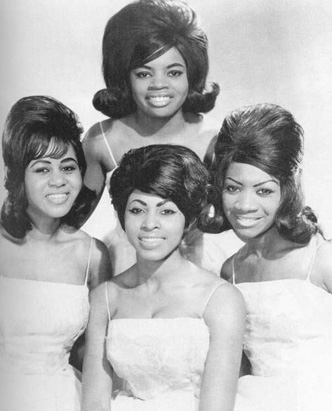
Patti Labelle was born Patricia Holte on May 24, 1944. Patti's earliest years were spent much like those of her musical contemporaries - singing in church. Like other girls growing up in the '50s, the idea of forming a vocal group was a natural. With Sandra Tucker, later replaced by Cynthia "Cindy" Birdsong, Patti formed The Ordettes and by 1961, the two school friends had hooked up with Wynona "Nona" Hendryx and Sarah Dash - singers from The Del Capris, a rival female group - to form The Bluebells.
Patti and her Bluebellestook a song from the history of Broadway, "You'll Never Walk Alone." They began incorporating Patti's high-note finale into new recordings such as "Danny Boy" (#4 Pop and R&B 1964) which turned out to be Patti LaBelle and her Blue Belles last of three singles for Parkway Records.
Eddie Holman

Eddie Holman was born on June 3, 1946 in Norfolk, Virginia and grew up in New York City. Little Eddie Holman stepped onto the stage on Amateur Night at the Apollo Theater in Harlem, New York and showed his smooth tenor voice at that young age. As a teenager, Holman and his family moved to Philadelphia. After graduating from high school, he attended Cheyney State University where he graduated with a degree in music. It was in the Philadelphia soul scene that he began to develop his trademark style. While still in college, he recorded his first hit record, "This Can't Be True" (1965) on Parkway. Other hits began to follow: "Am I A Loser From The Start" (1966) and "Never Let Me Go" (1967).
Don Covay
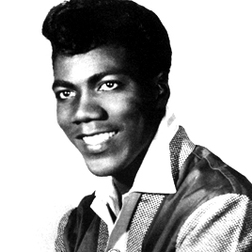
Don Covay, born Donald Randolph, March 24, 1938, in Orangeburg, South Carolina is an influential American R&B/rock 'n' roll/soul music singer and songwriter most active in the 1950s and 1960s, who received a Pioneer Award from the Rhythym & Blues Foundation in 1994. Covay was the son of a Baptist preacher who died when Don was eight. Covay resettled in Washington DC during the early 1950s and initially sang in the Cherry Keys, his family'sgospel quartet. He crossed over to secular music with the Rainbows, a formative group which also included Marvin Gaye and Billy Stewart. Covay's solo career began in 1957 as part of the Little Richard Revue. Over the next few years Covay drifted from label to label. He signed with Cameo and recorded a dance-oriented track called "Popeye Waddle" was a hit in 1962. He also wrote and recorded "Pony Time" which later became a US #1 single for Chubby Checker. Covay also had songs released on Parkway.
Evie Sands

Evie Sands was born in Brooklyn to music-loving parents, and fulfilled sooner than expected her mother's intuition that "this baby will come out singing" cutting her first singles by her mid-teens: "The Roll / My Dog", "Danny Boy, I Love You So / I Was Moved" on various labels. In 1965 Sands signed to the Blue Cat label of the legendary Red Bird Records ; she toured withThe Shangri-Las and began a lasting collaboration with the producer/composers Chip Taylor and Al Gorgoni with the release of the single "Take Me For a Little While" (written by Trade Martin). Prior to its release, a test pressing of Sands' recording was stolen by a Chicago-based producer, who shopped it to established Chess Records recording artist Jackie Ross, who was coming off the major Pop/Soul hit "Selfish One". Ross — who was unaware of the duplicity involved, and who left Chess shortly afterwards — and her producers loved the song, and recorded, pressed and released the record within 48 hours, beating Sands' version to the street by a week. Backed by the marketing and promotional muscle of Chess Records, and with Ross' name attached, this version unsurprisingly received the lion's share of the airplay. The subsequent legal struggle set back Sands' young career before it had had a chance to get started. By the time Chess withdrew the Ross single from the marketplace, Sands' version would only break through in the few cities (like Los Angeles) that had thus far stayed 'on the fence', waiting to see which version to play.
Sands' follow-up single: "I Can't Let Go" was lost amidst the post "Take Me..." chaos, leaving Brit-invaders The Hollies clear to score a hit cover in the spring of 1966. That same year, Sands debuted on Cameo-Parkway Records and would continue the pattern of songs introduced by Sands becoming successful for other artists when in 1967, Sands' latest single "Angel In The Morning" got caught up in label's business problems. Despite the single being one of the most requested radio songs wherever played, and the initial 10,000 copies selling out, the label's pending bankruptcy pretty much shut things down and the nothing more happened with the record. A few months later, the unknown Merilee Rush would score a Top Ten single with the song. The last single release on Cameo-Parkway by Evie Sands, was "Billy Sunshine" in January 1968, and that track reached Billboard's Bubbling Under 100 Singles chart before the final end of Cameo.
Pete Antell

Pete Antell played on guitar in the group, The Chants (the Cameo Chants records were another group) along with John Linde. The John Linde Combo had a record in November 1961 on Parkway Records called "Bossa Nova Bill" P-856 released unbeknownst to Pete & John. On Cameo, Pete's great vocal on the song, "Night Time" C-234, released in the fall of 1962 charting #100 is a much requested song for doo wop collectors and listeners in today's era. In mid 1963, he had "Keep It Up" C-264 released. Pete & John also did a fair amount of business at Cameo Parkway. They released the records of the Expressions 'On the Corner' P-892 (Bobby Bloom - lead singer) and both records of the Valrays: 'Get On Board' P-880 & 'Yo Me Pregunto' P-904. Thanks to Pete Antell for the actual facts.
Read the history of Pete Antell, John Linde, and the Chants in John Clemente's article.

The New Colony Six was an American band whose height of popularity was from the mid-1960s to the early 1970s. From Chicago, the group placed ten singles on the Hot 100 between 1966 and 1971. Original members were Ray Graffia (vocals), Chick James (drums), Pat McBride (harmonica), Craig Kemp (organ), Wally Kemp (bass), and Gerry Van Kollenburg (guitar). Ronnie Rice (vocals, keyboards, guitar) joined in 1966, replacing Craig Kemp. They recorded on the Sentar label that was distributed by Cameo Parkway. There were numerous changes in the lineup over the years.
Formed in 1965, New Colony Six scored on their album, 'Colonization'. Their sound was characterized by Richie Unterberger as "a poppier American Them with their prominent organ, wobbly Lesley-fied guitar amplifications and rave-up tempos", later devolving into "a cabaret-ish band with minor national hits to their credit by the end of the 1960s." One of their hits was, "Love You So Much". They followed that hit with "You're Gonna Be Mine". Like Paul Revere & the Raiders, they wore colonial outfits on stage. Ellery Temple briefly joined in 1967, replacing Wally Kemp, and was replaced by Les Kummel.

Most of the members, Clarence Jr., Alohe, James, Dennis, and Kenneth attended Harlan High School. Clarence Jr., the eldest son, was the group's lead singer, choreographed dance routines, was the principal songwriter, and played guitar. Contralto Alohe also attended Harlan High where she played trumpet in the school's concert orchestra. First tenor James sang lead on the group's Top 40 R&B hit "Oooh Baby, Baby"; he also played guitar and was a skilled line artist who won three scholarships to the Art Institute of Chicago and won an Artist of the Year Award from the Chicago Board of Education. Second tenor Kenneth was a talented bass player.
Signing with Mayfield's Windy City label, distributed by Philadelphia-based Cameo Parkway Records, their first single was the Clarence Burke Sr. written ballad "You Waited Too Long" b/w the upbeat "Don't Waste Your Time," a Mayfield song. A double-sided hit in Chicago, the A-side charted number 16 R&B on Billboard's charts in the spring of 1966. More hits followed: the soft, lilting "World of Fantasy" b/w "Playgirl's Love," the "blue light in the basement" ballad "Come Back" b/w "You Don't Love Me," and the slinky, exotic "Danger! She's a Stranger" b/w "Behind Curtains" -- most of the singles were on the LP 'The Five Stairsteps'.
About the end of 1967, Cameo-Parkway folded and Windy C switched to Buddah Records through former Cameo-Parkway executive Neil Bogart who joined the new label as co-president. Bogart would late be president of Casablanca Records.
Bobby Ellis
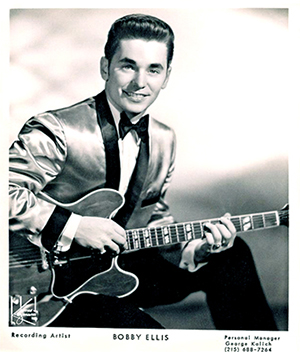
"This is my original recording as Bobby Ellis (my stage name) on
Cameo-Parkway records when I was at the tender age of 17! I got to
perform on a local TV show called Ed Hurst at Aquarama in PHILLY and did
several regional record hops! You'll note that my voice was pretty sweet
and syrupy on this platter to capitalize on the Bobby Vinton ballad
sound which was HOT at the time!
https://www.youtube.com/watch?v=XfZ631s0SZk
"Just wanted to fill you in a little more on my recording that was
done back in 1964-65. The song, 'She's Got a Heart of Stone', was
written by Kal Mann and Dave Appell to capture the sound of Herman's
Hermits I'm Into Something Good! The session was co-produced by Dave
Appell and Thom Bell who also sang back-up on it! As you know Bell went
on to write for some pretty hefty Philly soul names such as the
Delphonics and Spinners! Like so many that walked through Cameo's doors
at the time no one suspected that the label was in financial straits and
being sold off in 1964 by Bernie Lowe! I was able to do some record hops
in the area with the A side: 'It's The Talk Of The Town', which you are
already familiar with and I also appeared on local TV with Ed Hurst at
Aquarama! As far as Cheltenham Records went, my original DJ copy came
out on Cameo C-354 but the subsequent pressings were done under the
subsidiary Cheltenham label which was named after Cheltenham Ave. in
Philly!
All my best, Bobby"
Recording Engineer Joe Tarsia
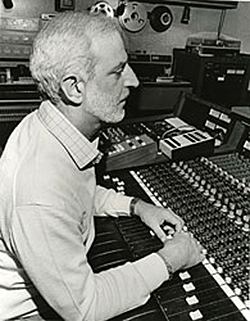
Joe Tarsia grew up in Philadelphia with a love for music and electronics. That combination eventually led him to work as a laboratory technician for Philco Corp. in the research department. In his spare time, he moonlighted fixing TVs, where he met someone who had a recording studio and needed his tape recorder fixed. Joe never left and eventually rebuilt the studio. He began servicing other studios, one of which was Cameo Parkway. He worked his way up from Assistant Junior Engineer to Chief Engineer, where he worked with such artists as Chubby Checker, Dee Dee Sharp, the Dovells, Bobby Rydell, the Orlons & Bunny Sigler. After CP, Joe was the chief engineer at Sigma Studio for Philadelphia International, a company started by CP alumni, Gamble & Huff.

Chubby Checker & Joe Tarsia
Cameos (Turbans)
Candy & the Kisses
Carroll Brothers
Christine Cooper
The Dream Girls
Clint Eastwood
Fabulous Flippers
Janie Grant
Paul Hampton
Hardly Worthit Players
Honey Love & the Lovenotes
Impacs
Ivy League
Rufus Jones
Roddie Joy
Jerry Jackson
Ronnie Lavelle
Bernie Lowe
Buzz Kirby
Johnny Maestro
Jack Merlin
Ohio Express
Mike Pedicin Quintet
The Philadephians
The Rationals
Rays
Rick and the Masters
Ray Rush
Bobby Rydell & Chubby
Checker
Billy Scott
Bunny Sigler
Melvin Smith
Judy Stone
The Storey Sisters
Soul Agents
Stylettes
Screamin' Lord Sutch
Taffys
Doris Troy
The Undertakers
The Valrays
Joe Van Loan
Ray Vernon
Alaine Williams
Ben Zine
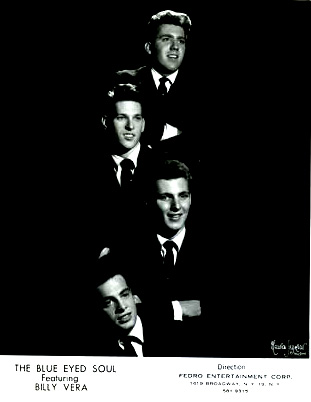

Johnny Daye
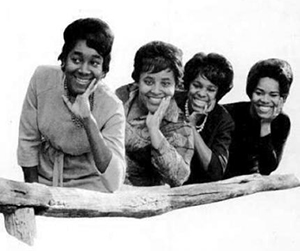
Bronzettes

Dreamers

Storey Sisters

Fred Nuzzolillio (Dan Dailey) session sax

Ray Deeley session drums

Ellis Tollin session drums
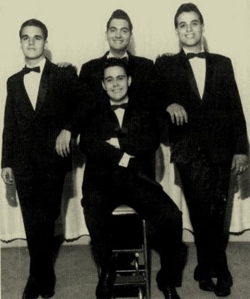
The Possessions

The Skyliners
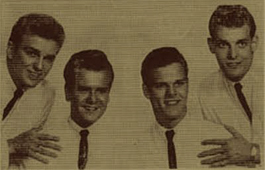
The Jordan Brothers

Rick & the Masters

The Temptations

Harold J Cromer

Emblems AKA teachers

Bob Brady & the Conchords
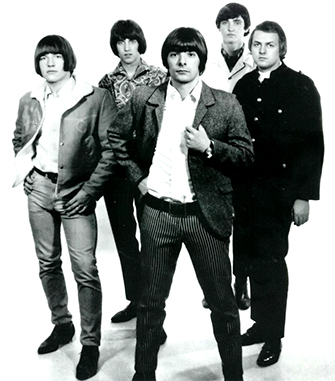
Terry Knight & the Pack

Lonnie Youngblood

Johnny Maestro

Maynard Ferguson

Edison Electric Band

Exceptions

Expressions

Rites of Spring
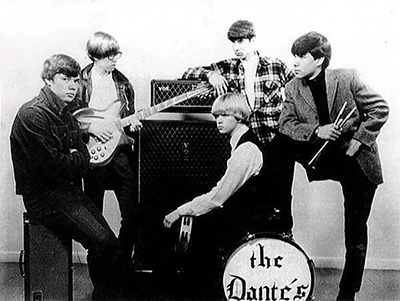
Dantes
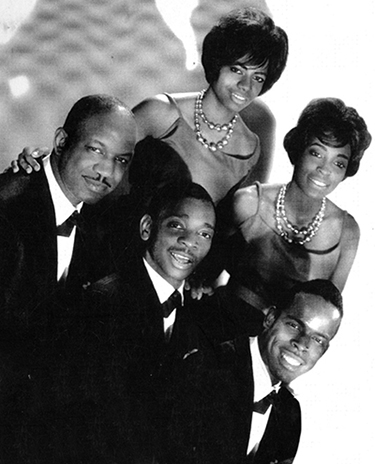
Co-Eds

Sunny & the Sunliners


Billboard Record Music Newsweekly September 21, 1963